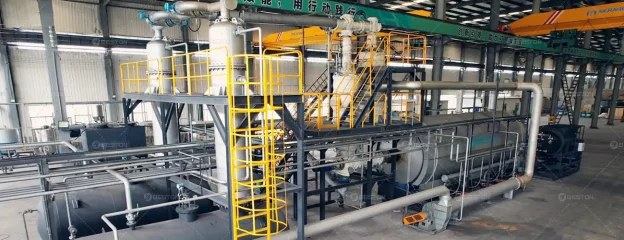
Feedstock composition is one of the principal determinants of pyrolysis performance. Although operating temperature, residence time, heating rate, and condensation efficiency all influence the process, the chemical architecture of the incoming material establishes the fundamental product distribution. In practical terms, two feedstocks processed under identical thermal conditions can generate markedly different proportions and qualities of pyrolysis oil, non-condensable gas, and solid char.
Carbon and Volatile Content Determine Product Distribution
The ratio of fixed carbon, volatile matter, ash, moisture, and organic compounds directly affects thermal decomposition. Feedstocks with a high volatile fraction generally produce more condensable hydrocarbons, whereas materials with greater fixed-carbon content tend to generate more solid residue.
Moisture is particularly consequential. Excess water absorbs thermal energy during vaporization and can reduce the effective temperature available for pyrolytic reactions. It may also increase the water content of the condensed liquid, complicating downstream separation and reducing fuel quality.
Ash behaves differently. Mineral matter does not substantially participate in the waste tyre pyrolysis machine but occupies reactor volume and remains concentrated in the solid fraction. High ash content can therefore lower the effective organic yield while increasing the proportion of inert residue.
Polymer Composition Influences Pyrolysis Oil Quality
For plastic-derived feedstock, polymer type is a major variable. Polyethylene and polypropylene are rich in hydrocarbon chains and can generate substantial quantities of liquid hydrocarbons when processed within an appropriate thermal regime. Polystyrene, meanwhile, has a strong tendency toward aromatic compounds because of its molecular structure.
PVC requires particular attention because chlorine-containing polymers can generate corrosive and undesirable compounds during thermal decomposition. Feedstock segregation and appropriate gas-treatment systems are therefore important when plastic pyrolysis equipment is used for mixed waste.
The same principle applies to tyres. Natural rubber, synthetic rubber, carbon black, steel reinforcement, and additives coexist within a tyre, creating a more heterogeneous feedstock than a single polymer stream. A waste tyre pyrolysis machine must therefore accommodate variations in rubber composition, moisture, steel content, and filler concentration.
Feedstock Purity Affects Both Yield and Stability
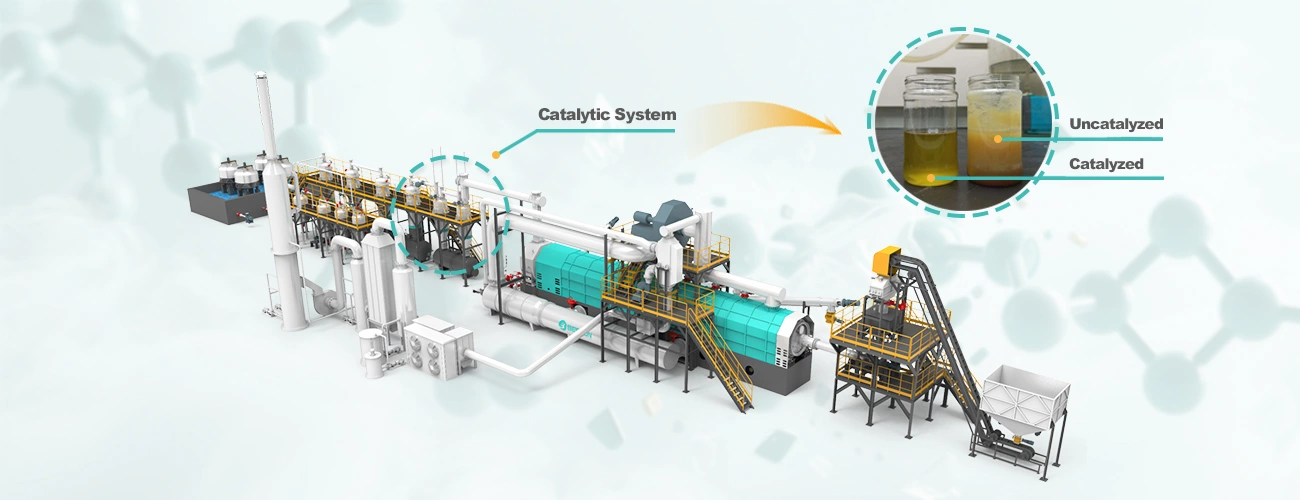
Contaminants can have an outsized influence on pyrolysis from a Beston pyrolysis plant. Soil, glass, metals, excessive moisture, and inorganic debris dilute the organic fraction and may accelerate mechanical wear. Certain contaminants can also affect heat transfer, condensation behavior, or gas-cleaning requirements.
For this reason, preprocessing is not merely a housekeeping step. Crushing, screening, magnetic separation, drying, and appropriate storage can improve feedstock uniformity and make reactor operation more predictable.
A relatively homogeneous feedstock generally provides a narrower process window. That matters because stable feed characteristics allow temperature and vapor residence time to be controlled with greater precision.
Why Feedstock Matters for Different Pyrolysis Systems
Equipment configuration should correspond to the material being processed. A tdu unit, for example, is commonly associated with thermal treatment of contaminated or difficult solid materials where indirect heating and controlled oxygen exclusion are important.
For plastic-rich streams, a plastic pyrolysis equipment configuration may emphasize controlled melting, vapor cracking, and staged condensation. Tyre processing requires additional consideration for char, steel separation, and sulfur-containing compounds.
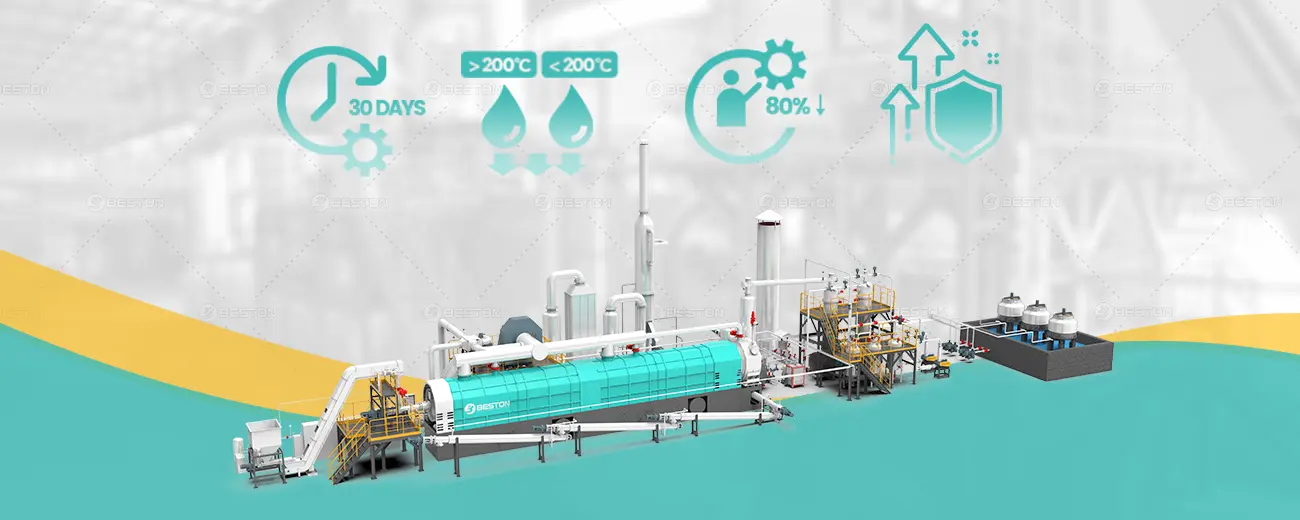
A Beston pyrolysis plant can be configured according to the characteristics of the selected feedstock and the intended product pathway. The objective is not simply to maximize liquid output. A commercially viable process must balance liquid yield, gas utilization, char characteristics, energy consumption, and product specifications.
Optimizing Feedstock for Better Product Quality
Feedstock characterization should precede process optimization. Key parameters include moisture, ash content, volatile matter, elemental composition, polymer or rubber type, particle size, and the presence of contaminants.
Once these variables are understood, operating conditions can be adjusted accordingly. Temperature determines the severity of thermal decomposition; residence time influences secondary cracking; and condensation temperature affects which vapor fractions are recovered as liquid.
Ultimately, pyrolysis is a feedstock-sensitive thermochemical process. Consistent input composition creates the foundation for consistent output. By controlling what enters the reactor before attempting to optimize what happens inside it, operators can improve product yield, reduce process variability, and obtain pyrolysis oil, gas, and char with more predictable characteristics.